
"Mostly close" means within 5%. data source: probably this https://fred.stlouisfed.org/series/LES1252881900Q vs this https://fred.stlouisfed.org/series/LES1252882800Q though if that doesn't mean what I think it does might change
 1,000
1,000People are also trading
https://www.pewresearch.org/fact-tank/2021/11/08/whats-behind-the-growing-gap-between-men-and-women-in-college-completion/ https://www.statista.com/statistics/184272/educational-attainment-of-college-diploma-or-higher-by-gender/ https://www.brookings.edu/blog/up-front/2021/10/08/the-male-college-crisis-is-not-just-in-enrollment-but-completion/
a right wing take on that is "men tend to take independent and risky action, women tend to follow what's high status - this is a "status inversion", like how poor people still smoked after it became gauche among rich and a harbinger of society moving on from universities"
im not sure that works, because colleges are still both exclusive credentialing institutions and have a practical hold on training and knowledge for a variety important technical careers. idk
i dont think that makes sense, even if it was true the men who aren't going to college in population statistics aren't disproportionately high status or something. maybe more risky/independent behavior = men go to college less - but that's a mistake?
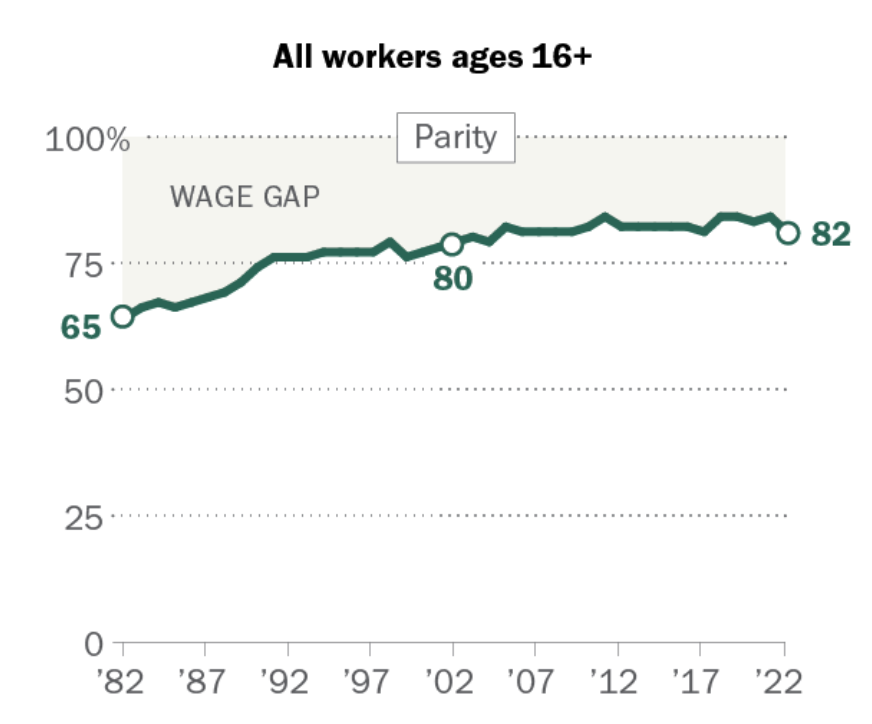
even then the increasing female college completion rate isn't showing up in the wage gap! based on this, there seems to be a within-cohort age effect, and a slow between-cohort decrease in the wage gap. but the decrease is not that fast